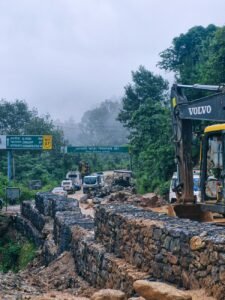
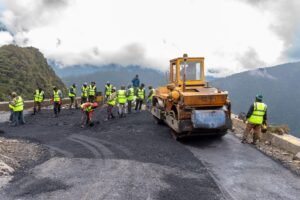
Nepal stranded contracts terminated is the headline decision from a Monday meeting chaired by Minister Sunil Lamsal with offices under the Ministry of Infrastructure Development. The meeting reviewed the progress of contracts, and the minister announced that all stranded, or sick, contracts will be ended immediately. The announcement sets out a set of steps for contracts that have stalled, for contracts that still need to be procured, and for work that must be re-procured after a termination.
This is a ministry policy announcement. It does not, by itself, finish a project. What happens next, under the decisions described, is a process of termination under the relevant agreements and law, followed where necessary by fresh procurement. The steps below summarise that process in plain terms, without adding numbers of contracts, named projects, deadlines or budget figures that were not in the announcement.
For contracts that are managed on an annual basis and where funding is assured, contract management is to move forward so that tenders can be called as soon as possible. The aim is to avoid a gap between a decision to proceed and the start of procurement, where the work is already funded and ready to be managed through the normal process.
For Design and Build bridge contracts where contractors show no interest in bidding, the process is to start for revising the existing norms for Design and Build procurement. That step recognises a practical problem: if the current procurement norms do not attract bidders for bridge work, the rules themselves need to be reviewed before new tenders are expected to succeed.
Under the Department of Roads, sick contracts are to be terminated immediately under the procurement agreement and the prevailing law, where the contractor has not done the work. The Department is also to monitor sick contracts periodically and keep an updated list. Regular monitoring and a current list are intended to stop stalled contracts from remaining unnoticed, and to give the ministry a clear record of which contracts are in difficulty.
For terminated contracts that must be re-procured, cost estimates are to be prepared and kept ready, so that tenders can be called as soon as the required budget is assured. In other words, the technical preparation should be done in advance, rather than starting only after funding is confirmed, to reduce delay once the budget position is clear.
Under the 2083 directive on the use and promotion of domestic production in public procurement, the Department of Roads is to arrange design changes and other measures to move from blacktopped roads to rigid pavement. That is a change in road construction approach, linked to the directive on domestic production, and it will require design work as well as other preparatory measures.
Preparation is also to be made so that reconstruction of roads and bridges damaged by disaster can start as soon as possible. That step is about readiness for urgent repair work, where damage has already occurred and delay would prolong disruption to travel and local access.
What Nepal stranded contracts terminated means for re-tendering
The background to the announcement, as described by the minister, is that the public sent details of long-stranded contracts from across the country, and the ministry took those details seriously. That context matters, because Nepal stranded contracts terminated will be judged by what follows, not only by the announcement itself. That public input helps explain why the meeting focused on stalled work, rather than only on new projects. It also puts pressure on the follow-up: ending a contract is only the first part, and the public test will be whether re-tendering and reconstruction actually follow in an orderly way.
For contractors, officials and local communities, the immediate effect is therefore a change in status for stalled contracts, not an instant completion of the underlying roads or bridges. Termination, monitoring, updated lists, ready cost estimates and revised norms are administrative and legal steps that must be completed before new work can be awarded and built. In that sense, Nepal stranded contracts terminated is a starting point for re-procurement, not an end point for the projects themselves. The announcement should be read in that light: as a direction to end stalled contracts promptly and to prepare the next procurement steps, rather than as a claim that the work itself has already been delivered.
Source: Minister Sunil Lamsal’s Facebook post, November 2, 2026
Related reading: Bajura bridge contracts cancelled and Rautahat stranded projects contracts terminated.