The Korala border road reopened on November 2, 2026, after continuous snowfall had blocked the road at the Korala border point in Mustang. Equipment and manpower were mobilised to clear the snow, and freight vehicles that had been stuck on the route have resumed movement. The reopening restores an important link at a border crossing where winter weather can quickly interrupt travel and trade.
Korala is the border crossing in Mustang district that connects Nepal to Tibet, China. It sits at a high altitude, where heavy snow can accumulate quickly and make a mountain road unsafe or impassable. For that reason, a closure at Korala is not only a local inconvenience. It can hold up goods moving across the border and affect people who depend on the road for travel, supplies and access to services in a remote mountain district.
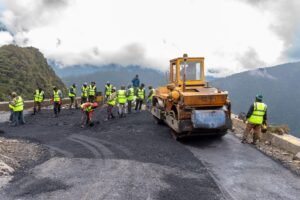
According to the minister’s post, the blocked section was cleared after equipment and manpower were mobilised for the work. The effort focused on removing snow from the road so that vehicles could pass safely again. Once the route was clear, freight vehicles that had been waiting because of the blockage were able to resume their journeys.
Why the Korala border road reopened matters for freight and local movement
Road access through Korala matters because it provides a direct overland connection between Mustang and the Tibet side of the border. When the road is open, freight can move in both directions, traders can plan deliveries with more certainty, and local residents can travel more reliably. When it is closed, those movements stop, and delays can build up quickly in an area where alternative routes are limited by difficult terrain and long distances. For traders and residents, the Korala border road reopened is therefore more than a single clearance: it restores a route they can plan around, provided standby crews can respond quickly to fresh snow.
The ministry has also arranged to keep equipment and manpower on standby in the border area. The purpose of that arrangement is to respond immediately if ongoing snowfall causes a fresh blockage. Rather than waiting for a new mobilisation after a closure, crews and machinery already in place can begin clearing work as soon as conditions allow. That approach is intended to reduce the length of any future disruption, although snowfall and mountain conditions will still determine how quickly a road can be made safe.
With the Korala border road reopened, attention now turns to keeping the route passable through the current spell of snowfall in the border area. Continued monitoring of weather and road conditions will be important, especially because snow can return at short notice at high altitude. For now, the immediate result is clear: the blocked road has been cleared, stuck freight vehicles are moving again, and standby arrangements are in place for any fresh blockage.
Source: Minister Sunil Lamsal’s Facebook post, November 2, 2026
Related reading: Upper Mustang Chaile road reopened and Tatopani border road repair and retaining wall.