Bhimdatta Remote Settlements
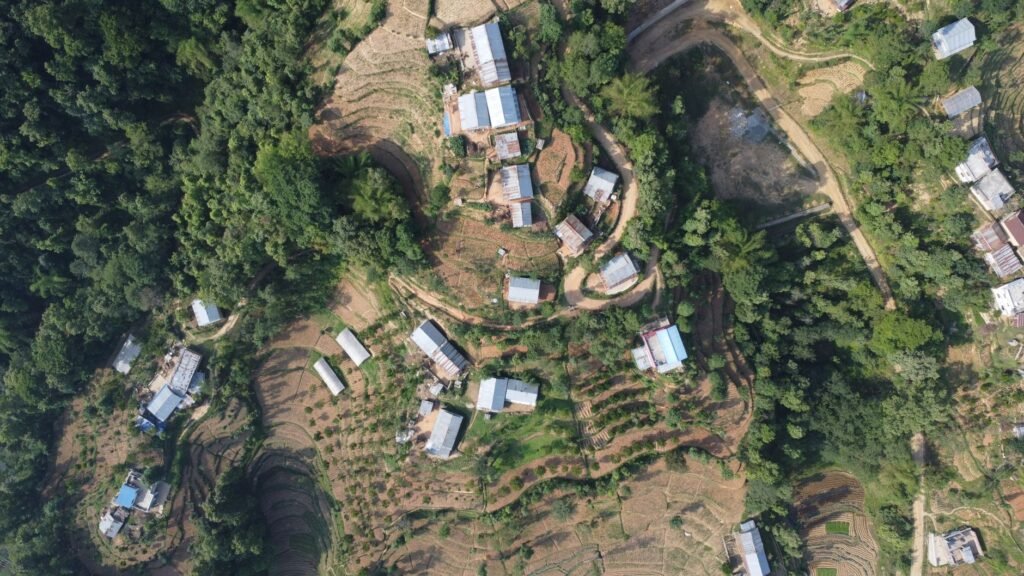
The Bhimdatta Remote Settlements of Khalla, Tundikhel and Musepatti still lack basic services, even though they lie only about 15 kilometres from Mahendranagar, the district headquarters of Kanchanpur, Gorkhapatra reports.
Residents of wards in Bhimdatta Municipality 9, about 15 kilometres from the Mahendranagar bazaar, are still suffering from the absence of basic services, and the difficult geography and lack of infrastructure have left them living the fate of a remote settlement close to the headquarters itself.
Roads, education, drinking water, irrigation, communication and land ownership certificates are among the basic state services whose absence the people of the area have endured for a long time. That list is the whole infrastructure of daily life, and its absence shows how little distance matters when the terrain is difficult and no road has been built.
Dhan Bahadur Khadka, a local resident, told Gorkhapatra that even though the Mahendranagar bazaar is only about 15 kilometres away, the poor condition of the road makes it difficult to reach the market to buy daily goods or to go for other work.
When the road is not passable, even carrying a sick person for treatment becomes difficult, and residents say it is hard even to seek help.
Electricity is the one service that has arrived. Power now reaches everywhere in the area, according to local residents, which makes the absence of the other services harder to explain.
A village with electricity but without a road, without drinking water and without a phone signal is a reminder that infrastructure arrives in pieces, and that a single connection does not make a settlement connected.
Education shows the same pattern. The other major problem of the area is linked to the schooling of children. The Saraswati Basic School in Musepatti ran classes up to class 5 for a long time, but now it is limited to class 3 only.
The Baijanath Basic School in Tundikhel also ran classes up to class 5, but now it is limited to the early childhood development class only. When classes are cut, children are forced to travel far to study in higher classes.
Children from Musepatti and Tundikhel must walk about three kilometres to the Bhimdatta Smriti Basic School in Khalla to study up to class 8, and small children face even greater risk in the rainy season, residents say. Some children must walk for about three hours to reach further study.
Communication is missing too. There is still no proper mobile phone network in the area. Residents say the absence of communication makes it difficult to contact relatives, to receive information and to seek help in an emergency.
In a settlement where the road is unreliable, the phone is the backup, and here the backup is missing as well.
Land is the deepest problem. Families have lived in the area since 2052 BS, local people say, but many families have still not received land ownership certificates. Without a certificate, citizens cannot be sure of their land, and they are deprived of state services and facilities.
Clean drinking water is also a problem for residents. Many families from the area have migrated to India for employment, with 50 to 60 families living in India for work, according to the report.
What happens next is a question for the municipality and the province. The settlements need a road that can be used in all seasons, a drinking water scheme, a mobile network and the distribution of land ownership certificates, and they need their schools restored to full classes.
Until those arrive, the Bhimdatta Remote Settlements will remain an example of how a place can be 15 kilometres from a district headquarters and still be remote.
Read more infrastructure news in the News section of Eve Construction, Nepal’s construction hub.