Karnali Air Service
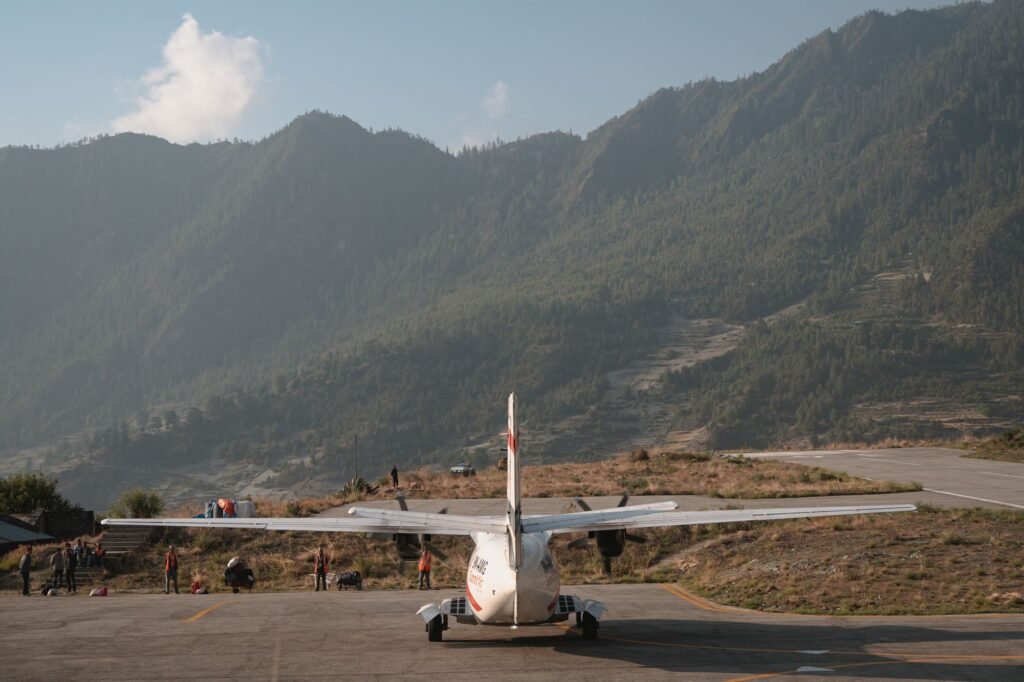
The Karnali Air Service from Surkhet to the remote districts is being prepared for regular operation, with the Karnali Province government starting groundwork to run flights from the provincial capital to the far districts, Gorkhapatra reports. Except for Kalikot, the districts of Mugu, Humla, Jumla and Dolpa have no regular air service from Surkhet, and people travelling by air to those districts must go through Nepalgunj in Lumbini Province.
The province government has set aside Rs 60 lakh in the current fiscal year to make flights from Surkhet to the remote districts regular and to give facilities to service providers. The province has regularly allocated a budget under the same heading, but it has not been implemented, and in the current fiscal year the province government has begun groundwork to implement the programme.
Mangal Bahadur Shahi, Chief Minister of Karnali Province, and Kalyani Khadka, Minister for Industry, Tourism, Forest and Environment, have started coordination and discussion with service provider organisations and the federal government.
The engineering and commercial problem is the empty seat. Flights to remote mountain districts rarely fill, and airlines have stopped services before because of a lack of passengers and losses.
The Chief Minister told Gorkhapatra that discussions are under way with service providers on various options for operating flights, including talks with the Civil Aviation Authority of Nepal and private companies. Among the options discussed are paying airlines an amount equal to the fare of empty seats, calculated on the basis of seat capacity, and giving relief on fuel.
Those are the standard tools for keeping a thin route alive: the government covers the gap between the seats sold and the seats flown, so the airline can keep the schedule even when the plane is half empty.
Residents of the hill districts around the provincial capital have been asking for regular flights from Surkhet. Humla, Jumla, Mugu, Kalikot and Dolpa have many residents, but there is no regular air service from Surkhet to those districts.
Earlier attempts to run regular flights from Surkhet to the Himalayan districts were made repeatedly, but airlines stopped the service because of a lack of passengers and losses, and the Chief Minister said the role of the federal government is also important for this work.
The Jumla airport shows why the service is so fragile. The runway at Jumla airport is 670 metres long and 24 metres wide, and only small Twin Otter aircraft can land there.
Residents of Jumla have been asking for years for the airport to be expanded so that aircraft with a capacity of 40 seats can operate, but that demand has never taken concrete form. The airport needs 183.80 ropani of land in wards 1 and 2 of Chandan Nath Municipality for its expansion.
A detailed project report for the expansion has been prepared, but work has not moved ahead as planned.
Three accidents at Jumla airport have claimed 13 lives, and the airport’s infrastructure and runway have still not improved as expected over the decades. On Magh 3, 2052, an aircraft crashed on the runway itself, killing five people including crew members and injuring seven.
On Asar 7, 2063, a Yeti Airlines aircraft crashed, killing eight people including three crew members. On Jestha 26, 2075, a Tara Air aircraft was destroyed in an accident during landing, although all 18 passengers on board survived.
Journalist Nawaraj Shahi told Gorkhapatra that promises to upgrade the airport and run regular flights have come repeatedly but have never been implemented.
Jumla airport has been in operation since Asoj 12, 2021 BS, built with the labour contribution of local people and the initiative of the state, and more than five decades have passed since it opened, yet its infrastructure has not expanded in step with time.
Nepal Airlines, Sita Air, Tara Air and Summit Air currently fly to Jumla, but the limited capacity of the airport and the dependence on small aircraft make it difficult for passengers to get easy and regular service, and local people have asked the government to prioritise the upgrade of the airport for safe, reliable and easy air service.
What happens next is the test of the Rs 60 lakh allocation. If the province agrees terms with the airlines and the Civil Aviation Authority, the Karnali Air Service from Surkhet to Mugu, Humla, Jumla and Dolpa could become regular for the first time.
For engineers, the longer question is the runway: until Jumla and the other mountain airports can take larger aircraft, the service will remain small, costly and dependent on subsidy.
Read more infrastructure news in the News section of Eve Construction, Nepal’s construction hub.