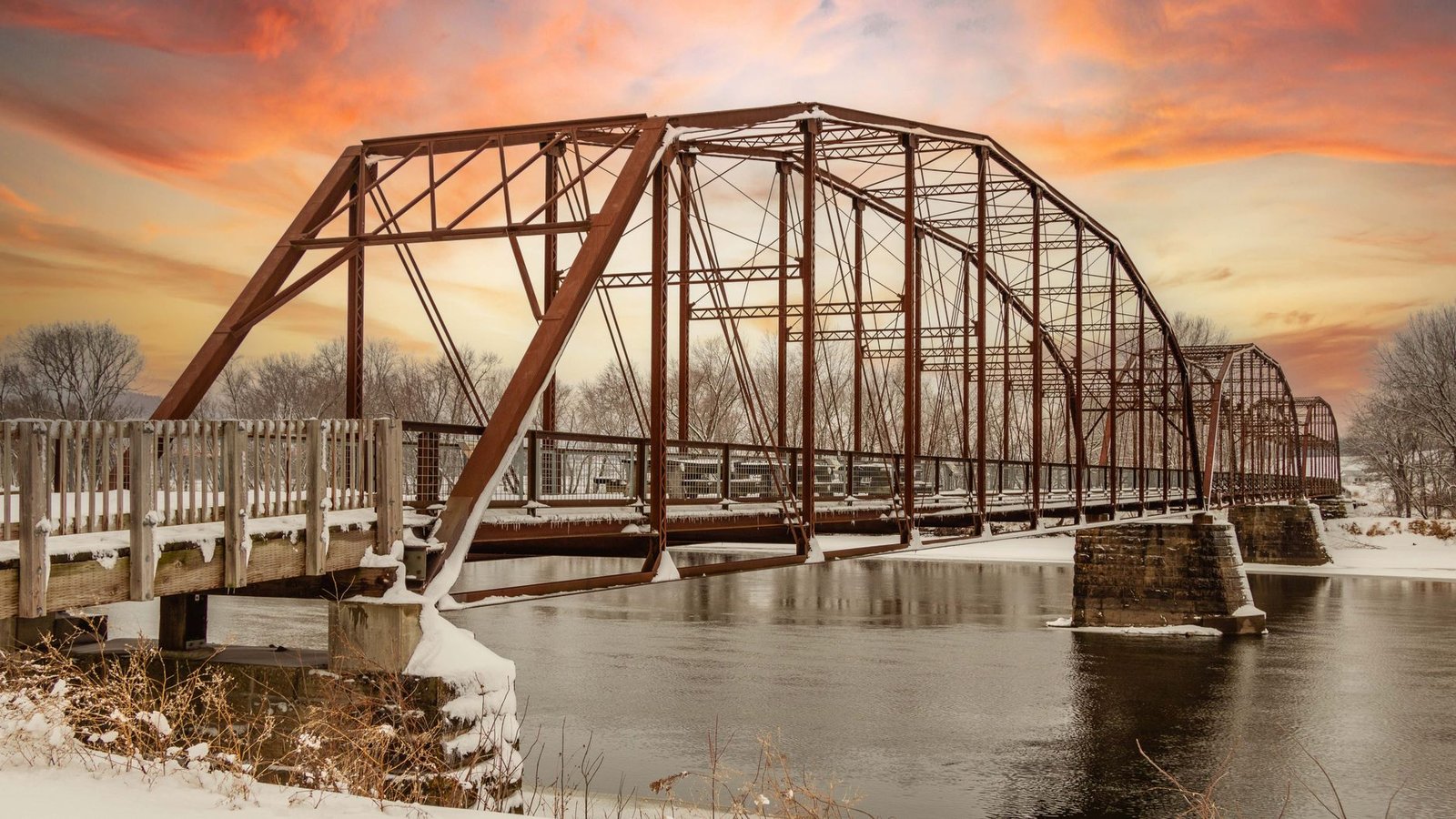
A 60-metre steel truss bridge over the Bhakra Main Line Canal collapsed early on Thursday, November 19, 2026, near Pasiana village on the Patiala-Sangrur bypass in Punjab, India, trapping two trucks on the broken span. The Bhakra Canal bridge collapse happened at about 5:30 in the morning, according to local officials, and both drivers were pulled from the wreckage alive. No deaths were reported.
Three sand-laden trucks travelling from Haryana were crossing the bridge together when the structure gave way from the centre, according to reports citing PTI and The Indian Express. One truck managed to get across, while the two behind it were trapped in the collapsed section. One of the trapped trucks then caught fire, and fire crews brought the blaze under control. Villagers helped pull the drivers out, and both men were taken to hospital with minor injuries.
Bhakra Canal bridge collapse: what happened at Pasiana
The bridge carries the Patiala-Sangrur bypass, part of the national highway now numbered NH-7, across the Bhakra Main Line Canal. According to IANS, the collapse happened at about 6:00 AM while the two trucks were passing over the bridge. Water from the canal began overflowing onto the damaged section after the failure, which complicated the rescue and recovery work, according to the same report.
Driver Sukhwinder Singh, 55, told The Indian Express that he sensed the road caving in after the first truck got stuck, according to Jugti. Eyewitnesses told ANI that the bridge had been shaking before it suddenly gave way. The National Highways Authority of India, known as NHAI, diverted traffic to the service road and posted road safety marshals, barricades and signage at the site, according to its advisory.
A Bailey-type bridge carrying a national highway
The structure that failed was a steel truss bridge described in reports as a Bailey-type bridge, a modular steel design that originated as temporary military bridging and is often used as a quick replacement span. According to NHAI, the collapsed bridge was built by the Border Roads Organisation under the supervision of the Punjab government’s Public Works Department. The four-lane Patiala bypass was later executed under the Punjab PWD and the stretch was handed over to NHAI in 2018. It is currently under NHAI’s short-term maintenance contract.
Reports say the bridge was constructed around 2016, which would make it roughly a decade old. That detail matters because a Bailey-type span is designed to be put up fast and moved on, not to carry heavy commercial traffic for years on a busy national highway. A structure like this needs a clear load rating, regular inspection and a firm rule against several heavy vehicles occupying the same span at once. The early reports point to exactly those questions. Patiala Deputy Commissioner Himanshu Jain said initial inputs from NHAI indicated that one truck had broken down on the bridge, leading to three trucks piling up and possibly exceeding its load-bearing capacity. Officials have also raised overloading as a possibility, while residents have pointed to poor upkeep. The exact cause has not been established, and a magisterial inquiry has been ordered alongside a technical investigation.
Why it matters
The Bhakra Canal bridge collapse is a warning about what happens when a temporary bridge becomes a permanent part of a highway. Engineers design a Bailey span for a known load and a limited service life, and every year it stays in place without a proper reassessment adds risk that nobody can see from the road surface. Eyewitness accounts of shaking before the failure suggest the structure was already distressed, and the driver’s account of poor condition raises the question of whether inspection reports were acted on.
The wider issue is inspection and maintenance of older bridges on India’s national highways. Punjab Public Works Minister Harbhajan Singh ETO wrote to Union Minister for Road Transport and Highways Nitin Gadkari on November 19, 2026, asking for a comprehensive structural safety audit of all bridges on National Highways across Punjab, with special focus on ageing structures, load-bearing capacity and structural deterioration. The collapse also disrupted canal flow, and the district administration said water flow had been reduced from the Nangal headworks while irrigation teams strengthened the banks with sandbags.
What happens next
NHAI said it is arranging a 60-metre Bailey bridge, originally meant for a traffic diversion at Vallah in Amritsar, to restore movement on the affected stretch within three to four days. That replacement span will itself be a Bailey-type bridge, so engineers will need to set and enforce a clear load limit and a plan for a permanent replacement if the crossing is to carry heavy trucks safely for years.
The magisterial inquiry and the technical investigation will need to answer three questions: what the bridge’s real load-bearing capacity was, whether the trucks on it exceeded that capacity, and whether inspections had flagged deterioration before the collapse. Until those answers are published, the failure stands as a reminder that a bridge’s age and design type matter as much as its appearance, and that temporary spans need a planned end date.
Sources: IANS via The Freedom Press (https://thefreedompress.in/bailey-steel-bridge-over-bhakra-canal-in-punjab-collapses-two-trucks-trapped-drivers-saved/) and Jugti, citing PTI and The Indian Express (https://jugti.com/news/punjab/patiala-bhakra-canal-bridge-collapse/).