The Kerch Bridge lost its main road arch on Tuesday, November 17, 2026, when strikes on the crossing sent the 227 metre steel arch and the roadway beneath it into the Kerch Strait. According to Ukraine’s General Staff, the arch and a span of the bridge’s road section collapsed after being dealt powerful blows, while the parallel railway section stayed standing, although its arch was damaged.
Kerch Bridge: what happened on November 17
The collapse came on the second day of strikes against the crossing. According to Reuters, a drone strike on Monday, November 16, had already damaged the road arch, although traffic resumed after a brief pause and the bridge remained standing. In the early hours of November 17, further strikes dealt what Ukraine’s President Volodymyr Zelenskiy described as the fatal blow to the weakened structure.
Videos and images posted on X by Zelenskiy appeared to show the bridge’s main road arch collapsed into the Kerch Strait, blocking navigation. Reuters said at first that it could not immediately verify the footage, but in a later version of its report Reuters said videos and images verified by Reuters showed the bridge’s main road arch had crumbled into the sea, leaving a yawning gap. BBC Verify has also verified the collapse, and NBC News geolocated videos and photographs showing one section of the bridge collapsed into the sea.
Russia confirmed that the bridge’s structure had been damaged. According to Reuters, Sergei Aksyonov, Crimea’s Russian installed governor, said two people were killed in the strike and traffic across the 19 kilometre road and rail bridge had been suspended. Train travel across the bridge resumed on Tuesday after a brief pause, according to Reuters, and officials advised motorists who wanted to cross the Kerch Strait to use car ferries.
The engineering of the arch and why the loss is so serious
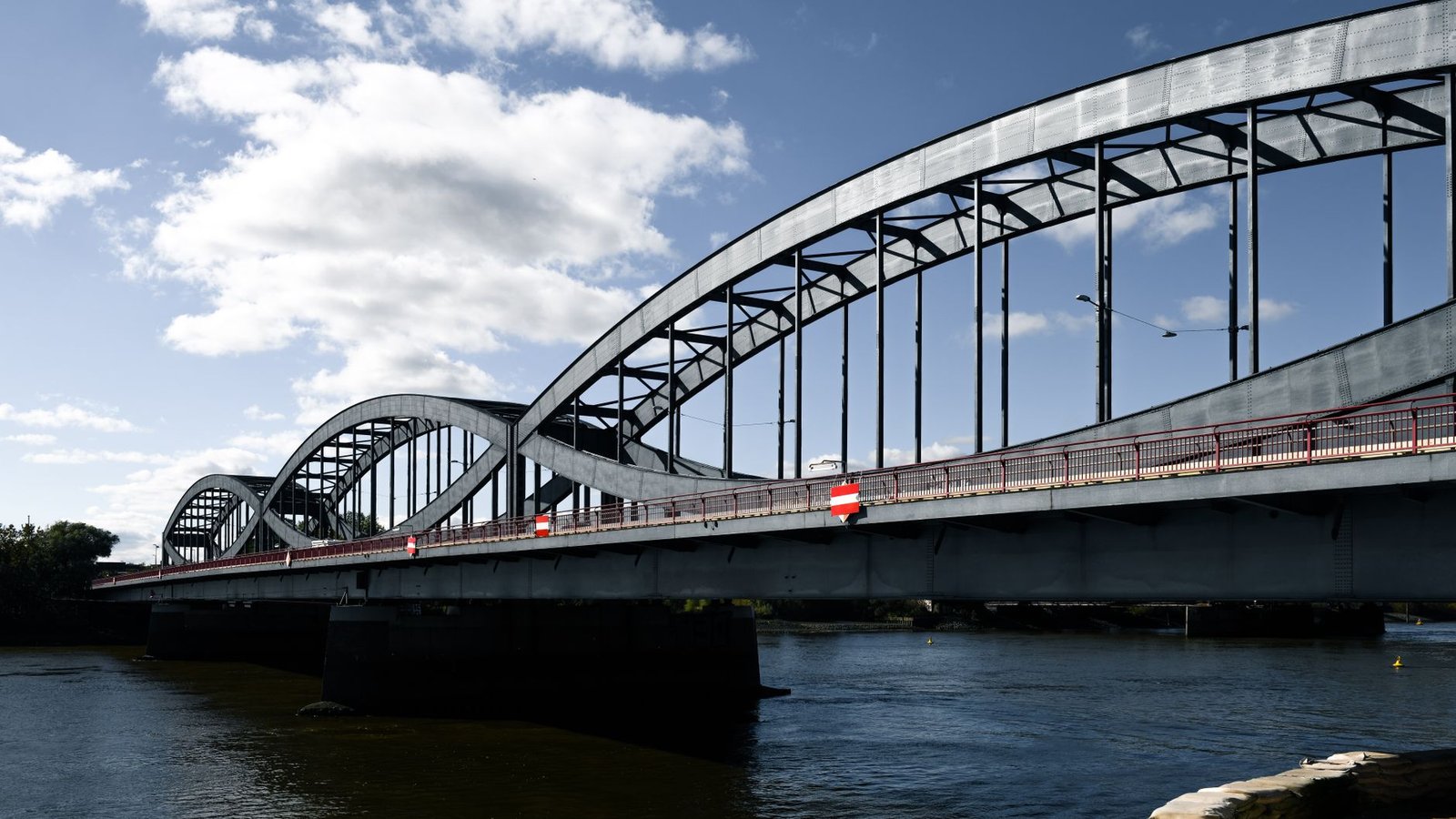
The crossing is a 19 kilometre road and rail bridge across the Kerch Strait, and the Kerch Bridge was built with two parallel steel arches, each about 227 metres long, spanning the shipping channel: one carrying the road deck and one carrying the railway. According to the BBC, the arches were floated into place in 2017, and the road bridge opened in 2018 with the railway following in 2019.
The arch was far more than a landmark feature. According to the BBC, it played a structural role, transferring loads and supporting the span and helping to ensure the stability of the entire structure. Daylight images taken from the shores of Crimea show a section about 200 metres long of roadway dragged below into the sea along with the arch, which weighs thousands of tonnes.
The parallel arch supporting the railway section has remained standing, although it may also have been damaged, according to the BBC. That matters because the two arches stand side by side over the same channel, and any damage to the rail arch would decide how much of the crossing can be used while repairs are planned.
The fallen wreckage also blocks the shipping channel. According to Ukrainian Shipping Magazine, cited in reporting on the incident, the debris fell into the Kerch Yenikale Canal, a roughly 120 metre wide channel that is the only deep water passage through a strait otherwise 3 to 6 metres deep. Andrey Sizov of consultancy Sovecon told Reuters the collapse could substantially delay any eventual resumption of shipping from the Sea of Azov, because debris would have to be cleared from the channel first.
This was not the first attack on the bridge. According to Reuters, a truck bomb in October 2022 killed four people and limited the bridge’s capacity for several months, and Ukraine has attacked the bridge several times since Russia’s full scale invasion began in February 2022. The difference this time, according to David MacKenzie of engineering consultancy COWI, is that the most critical and vulnerable part of the bridge has been hit. Structural engineer Colin Capriani of Monash University told BBC Verify the damage to the main span was catastrophic, and said it was very hard to envisage how the bridge could be rebuilt while it remained within range of Ukrainian weapons.
Why it matters
The collapse of the Kerch Bridge severs Crimea’s direct road link with mainland Russia. According to Reuters, the bridge was once a key supply route for Russian forces in Ukraine, although the military now relies more heavily on a land corridor through Russian controlled territory in southern Ukraine. The road closure therefore bites less on military logistics than it would have two years ago, but it still cuts a major civilian and freight route, and it blocks the shipping channel that carries grain out of the Sea of Azov ports.
For engineers, the incident is a stark case study in the vulnerability of a long span arch. A single arch carries the whole navigation span, so losing it removes the crossing in one event, and the wreckage falls exactly where ships need to pass. The same concentration of risk that made the arch an efficient design also made it the obvious target, and the hardest part of the bridge to replace.
What happens next
Kremlin spokesman Dmitry Peskov said the bridge will be rebuilt, and it will be even better than before, according to Reuters, and that a repair plan would be prepared. No official Russian damage assessment has yet confirmed the full extent of the damage, and no repair timeline has been announced.
According to MacKenzie of COWI, clearing the wreckage could happen fairly quickly, but reinstating full road traffic will take over a year. Before any rebuild of the Kerch Bridge can start, engineers must survey the standing rail arch and the piers, clear the fallen steel and roadway from the shipping channel, and decide whether the road span can be rebuilt in place or must be replaced with a new arch floated in, as the original was in 2017. Until then, the road link stays closed, rail traffic runs on a damaged structure, and ferries carry what traffic they can across the strait.