Kathmandu road pothole repair has moved at a steady pace over the past four months, with Road Division Kathmandu repairing and improving more than 27,000 square metres of damaged road surface across the capital, Infrastructure Development Minister Sunil Lamsal said on Wednesday, November 19.
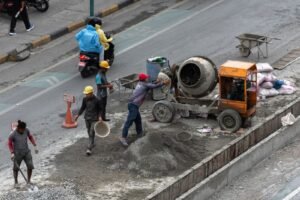
The minister described the division’s work as exemplary and thanked the workers and the whole Road Division Kathmandu family for the effort. He said the crews have been working day and night, including through the night hours, to keep the valley’s roads safe, organised and beautiful. The update came in a post on his Facebook page, where he shared photographs of night work under way on city streets.
What the Kathmandu road pothole repair drive has delivered
The headline figure from the four month drive is the scale of the patching itself. More than 27,000 square metres of potholes and damaged surface have been repaired and improved since the drive began, a pace that points to steady work across the valley rather than a one off campaign.
A central part of the effort is the division’s road ambulance, a rapid response repair unit that reaches damaged stretches quickly so that a pothole reported in the morning does not sit open for days. The ambulance works alongside regular maintenance, with crews returning to stretches that need attention again as traffic and weather wear them down.
Residents also have a direct line to the division through a road suggestion app, which lets the public report potholes and other road problems so crews can act on them. The app turns everyday road users into the division’s eyes on the street, and it means repairs can be directed to the places people actually use.
Much of the work happens at night. Night crews repair busy streets when traffic is light, which lets them close a lane or a stretch without adding to daytime congestion, and it keeps workers safer from fast moving traffic.
Why the Kathmandu road pothole repair matters
Potholes are a daily hazard in Kathmandu, above all for motorcyclists and scooter riders, who make up a large share of the city’s traffic. A deep hole can throw a two wheeler off balance in a moment, and riders often swerve without warning to avoid one, putting themselves and others at risk.
Damaged stretches also slow traffic, damage vehicles and raise the risk of accidents. The danger grows when rain fills the holes and hides their depth, so a dip that looks shallow can be far deeper than it seems. Timely patching costs far less than rebuilding a road after it has broken up, so catching damage early saves public money as well as trouble for drivers.
Keeping the valley’s main roads in good repair matters because they carry the heaviest traffic in the country. Kathmandu’s streets move commuters, goods, buses and emergency vehicles through the day, and a surface that is safe and smooth keeps that movement flowing.
What happens next
The minister’s post gives no new completion date, and the division’s regular maintenance cycle continues. Residents can report new potholes through the road suggestion app, and crews will keep working through the cycle of patching and maintenance. The four month figure shows the current Kathmandu road pothole repair drive is continuing rather than finished, with more streets still to be covered.
Source: Minister Sunil Lamsal’s Facebook post, November 19, 2026.
Related reading: Gorusinghe-Chandrauta Road Contract Signed: 19.2 km of East-West Highway to Six Lanes
Kankadbhitta-Laukahi Road Construction Speeds Up as Eastern Section Hits 56%