Nepal Land Use Master Plan
The Nepal Land Use Master Plan is the missing foundation of the country’s development, argues Dr Thakur Prasad Bhatt in an opinion piece in Gorkhapatra. After decades of wanting development and working for it, Nepal still asks whether its development is possible at all, he writes, and that itself is a sad state of affairs.
Development is complex and multi-dimensional, and it cannot be achieved easily or in a short time, but for a country regarded as rich in resources, the failure to find even a dignified rhythm of development is a matter of irony.
Dr Bhatt’s central argument is that Nepal has thought about development in pieces. Plans have focused on one sector at a time, or on development in one particular area, and that approach cannot build an overall pattern of development or carry it forward in a single rhythm.
The efforts of recent decades have failed to reach completion or to carry forward the sustainability of overall development, he argues, because of that fragmented viewpoint. The first need, in his view, is to identify the causes of that fragmentation and to search for the basic foundations that development requires.
The possibility of development exists, he writes, but the environment it needs does not, so the first requirement is to prepare the ground for development.
The foundation he names is the Nepal Land Use Master Plan. Regional development and integrated rural development were discussed on the path of development, and the noted geographer and development expert Dr Harka Gurung included regional development planning in the Fourth Plan, but the land use master plan policy itself was never implemented.
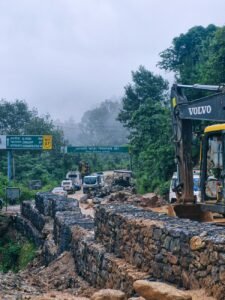
Without it, roads, settlements and economic activity have been built in isolation from each other, and in a haphazard style, rather than on the basis of an overall development pattern.
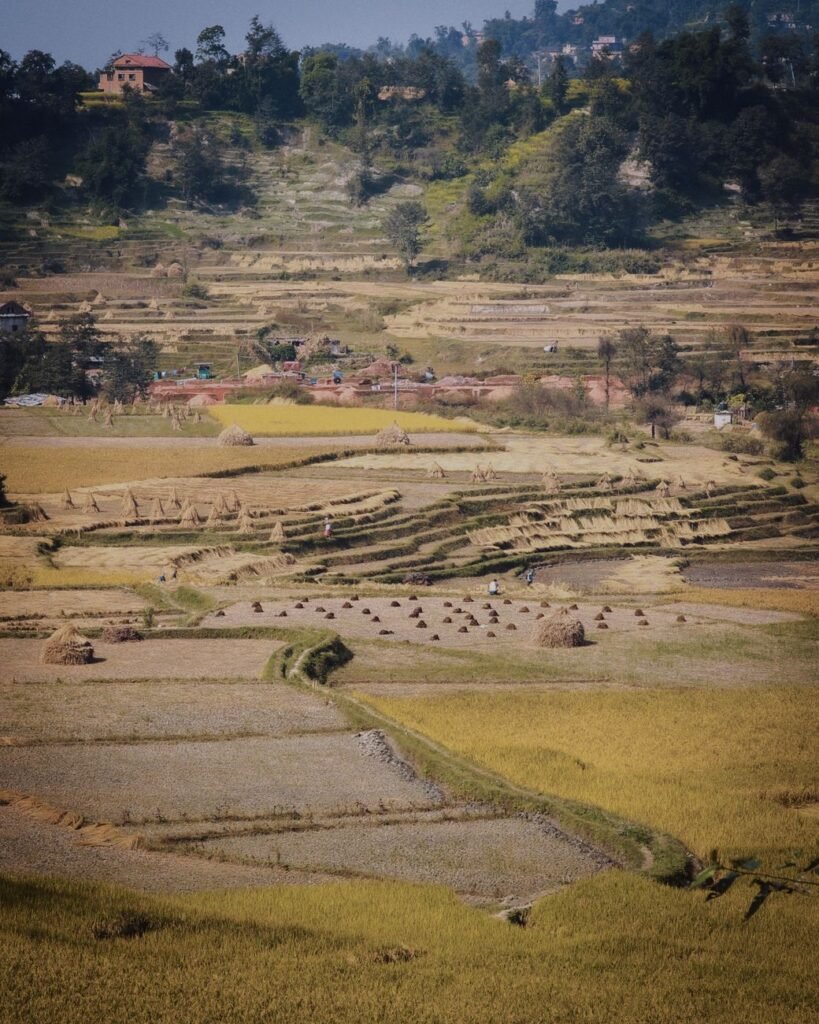
The costs of that absence are visible in the landscape, Dr Bhatt argues. Unplanned roads and migration have destroyed fertile farmland. Villages have emptied as people migrate, while houses are built in a planless way on fertile plains, with roads running through them.
Most local levels have no site identified for waste management. Settlements have grown where they should not, while the places where settlements could grow have been left without services.
He gives the example of the roads from Kathmandu to Hetauda: including the fast track, there are now nine roads in that corridor, main roads and side roads together, yet in the rainy season there is still no road that can be operated in a durable way. The question, he asks, is how many roads are needed and how that number is to be decided.
His other example is the three east-west highways now in operation across the Tarai and the hills. While those exist, he asks, what was the need to build another parallel highway a short distance away, through an area that is geographically sensitive, rich in biodiversity and thinly settled?
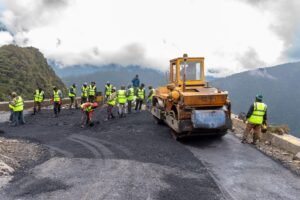
Meanwhile the Pushpalal Highway in the hills and the Hulaki Road in the Tarai remain incomplete. A land use master plan, he argues, would have weighed the condition of settlements, economic and social feasibility and the environment before deciding which transport network to build, and would have joined the north-south roads to the east-west highways instead.
The Nepal Land Use Master Plan would also guide where settlements are built, where schools and hospitals are placed, where industrial areas are established and how waste is managed, Dr Bhatt writes.
It would identify risk prone and safe areas so that new settlements are planned safely and old settlements can be moved where needed, a question that has arisen after the 2072 earthquake and again in the discussion of relocating settlements after the Bhotekoshi and Trishuli floods.
It would link agriculture, forest and tourism planning to the land, and it would give a base for joining local production to markets.
Implementing the plan needs coordination among the federal, provincial and local tiers, Dr Bhatt concludes, together with the joint work of geographers, geologists, anthropologists and sociologists, economists and planners, and with local knowledge given equal importance.
Information technology has made preparing such a plan easier than before. Only a plan prepared in that way, he argues, can be implemented in practice and can lay a durable base for the all round development of the country.
Read more infrastructure news in the News section of Eve Construction, Nepal’s construction hub.