Sunkoshi Bridge
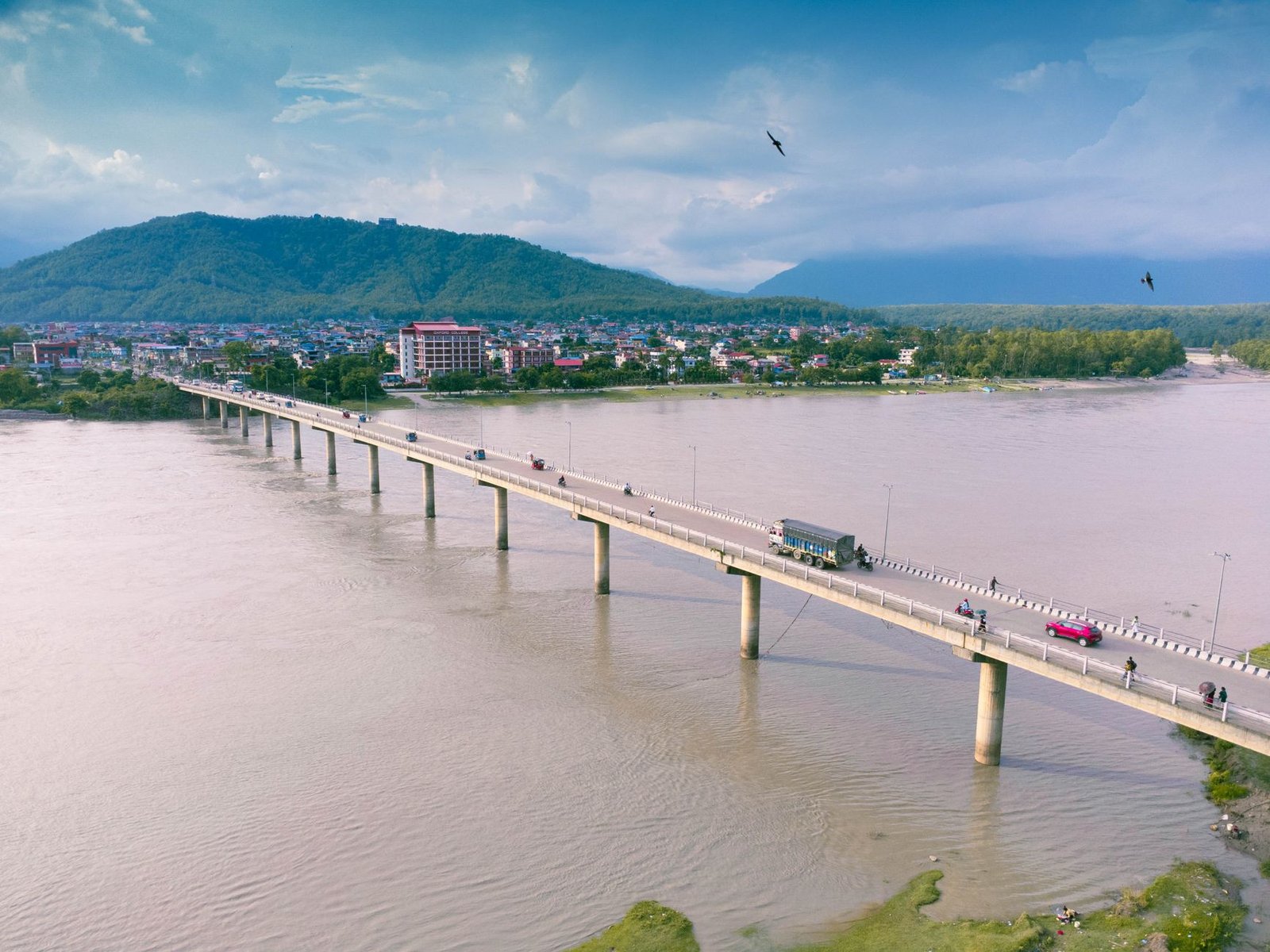
The Sunkoshi Bridge at Phoksingtar, the 120 metre concrete bridge that linked Udayapur and Khotang districts, was washed away by flood two years ago and has still not been rebuilt, Gorkhapatra reports. The bridge has not been reconstructed on the Gaighat to Diktel road section, and ordinary people have faced great difficulty in travelling because of it.
The flood came on Asoj 11, 2081, and it washed away the concrete bridge that joined Khotehang Rural Municipality 1, Lichiramche, in Khotang with Rautamai Rural Municipality 5, Phoksingtar, in Udayapur. The whole middle section of the Sunkoshi Bridge was carried away. Since the Sunkoshi River washed the bridge away, the direct connection between Udayapur and Khotang districts has been effectively cut for the past two years. The bridge was completed on Asoj 29 and had been in operation for about two years before the flood took it, so the districts enjoyed only a brief period of direct connection before losing it again.
The loss falls hardest on daily life. Residents of the surrounding local levels and of various places must pay a high price for health treatment, trade, business, the transport of goods and travel itself, according to Pandav Rai, ward chairperson of Rautamai Rural Municipality 5 in Udayapur. A bridge that carried the Gaighat to Diktel road was the spine of the local economy, and its absence has pushed every journey onto a longer and more expensive route. Travellers must now go by vehicle from Gaighat to Rasuwa in Rautamai, then cross the Bholunge bridge to reach Khotang district, and then take another vehicle onward.
The history of the crossing makes the delay harder to accept. Before the concrete bridge was built, a Bailey bridge was installed each year for about four months until Chaitra to run vehicle service, because the permanent bridge was delayed. That seasonal arrangement shows that the crossing was always recognised as essential, and that temporary works were used year after year while the permanent bridge was awaited. The concrete bridge, once built, became the backbone of the economic development of the district, local people say, and economic activity in the area improved after its construction.
The engineering problem is the river itself. The Sunkoshi is a wide and powerful river in flood, and a bridge across it needs deep foundations, protection against scouring and an approach that can survive the monsoon. The middle section of the bridge was washed away, which points to the force of the flood and to the vulnerability of the crossing. Rebuilding it will need a design that accounts for that flood, not a repeat of the structure that was lost.
The political response is a promise to raise the matter. The federal member of parliament from Udayapur constituency 1, MP Gelal, told Gorkhapatra that the issue of taking the initiative for the construction of the bridge would be raised with the government and resolved. No date for the start of reconstruction has been announced, and no budget has been named in the report.
What happens next is the decision that residents are waiting for: a funded reconstruction with a flood resistant design, or another year of detours. For engineers, the Sunkoshi Bridge is a reminder that a bridge is only as good as its foundations in the river, and that a crossing which takes two years to build can be lost in a single night of flood.
Read more infrastructure news in the News section of Eve Construction, Nepal’s construction hub.