
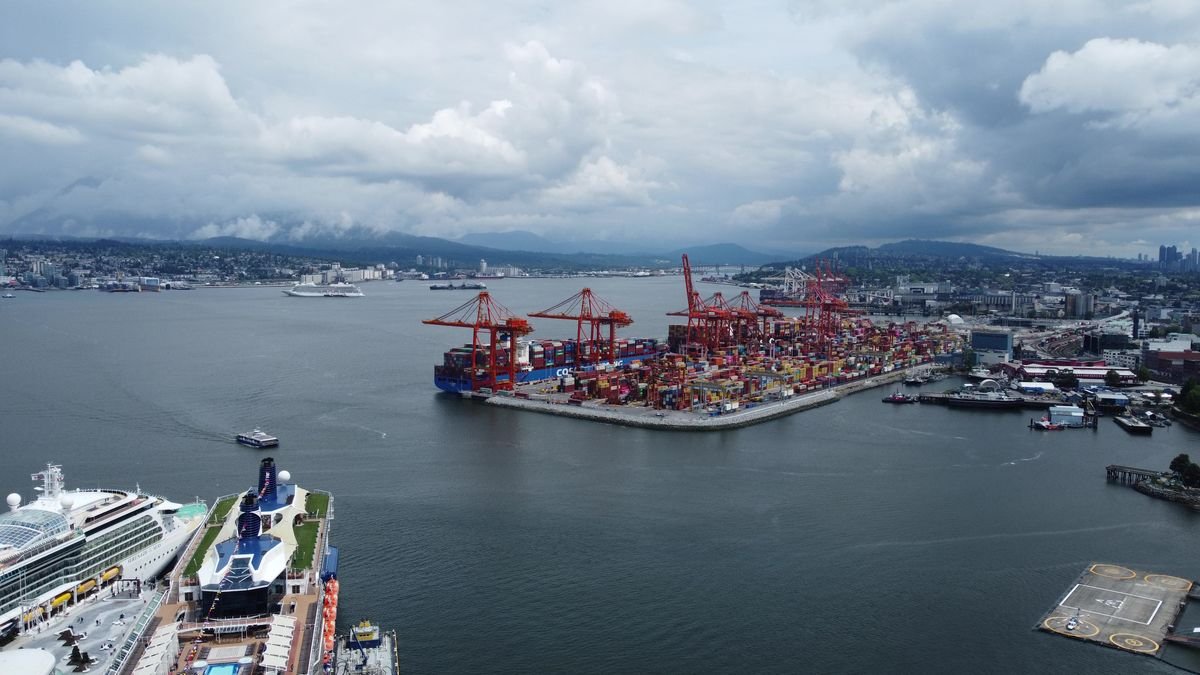
On October 30, 2026, the Government of Canada listed Roberts Bank Terminal 2 as a project of national interest, giving a major Vancouver port expansion a faster federal approval path. According to Transport Canada, the listing provides upfront certainty on the remaining federal authorisations and could bring the terminal into commercial operation in 2035, four years earlier than the previous 2039 target.
Roberts Bank Terminal 2 is a proposed three berth container terminal at Roberts Bank in Tsawwassen, in Delta, British Columbia, at the Port of Vancouver, which the government describes as Canada’s largest port. According to the Vancouver Fraser Port Authority, which is leading the project, the terminal would be created by extending the existing port causeway and adding about 320 acres through land reclamation. The wider causeway would carry roads and freight rail, and the new terminal would add 2.4 million twenty foot equivalent units of annual container capacity.
Roberts Bank Terminal 2: what will be built
The engineering core of the project is land building in open water. According to reporting on the announcement, the port authority selected the TerraMarine consortium as its preferred construction partner through a competitive process. Early construction and site preparation are expected to start in late 2027, with major construction and reclamation in 2028, subject to a final investment decision expected by mid-2027. That sequence matters because reclamation, causeway widening, berth construction and rail and road connections must be phased so the existing port keeps operating while the new ground is formed and settled.
The project has already passed a long regulatory road. According to the Government of Canada, the terminal received federal environmental approval in April 2023, subject to 370 legally binding conditions. The national interest listing does not remove those conditions, the government says. It instead consolidates the remaining federal permits into a clearer path, under the Building Canada Act, and keeps environmental safeguards and consultation with Indigenous communities in place. The government also points to 27 Mutual Benefit Agreements with Indigenous communities covering training, procurement, employment and business opportunities.
Why Roberts Bank Terminal 2 matters
The case for the terminal rests on capacity. According to Transport Canada, the new terminal would lift container capacity at the Port of Vancouver by about 50 per cent and on the West Coast by about 30 per cent. The government says the added capacity could support up to 100 billion dollars in annual trade, support about 17,000 jobs across supply chains, contribute about 3 billion dollars a year to GDP, and generate more than 630 million dollars a year in tax revenue. It also warns that without new capacity, congestion could add 800 million dollars to 900 million dollars a year in shipping and transportation costs from as early as 2031.
For engineers, the wider lesson is about gateway infrastructure as a system, not a single structure. A container terminal only works if ships, berths, cranes, yards, rail and roads move together. According to the government, combined rail and logistics investment linked to the project could cut container import costs by up to 25 per cent and shorten delivery times between Vancouver and Toronto by about 17 per cent. That is why the Port of Vancouver Gateway Strategy, which the government cites, covers container expansion alongside bulk and industrial land, rail expansion and environmental protection.
What happens next
The next checkpoint is the final investment decision, expected by mid-2027. According to the port authority, that decision will confirm financing for the estimated 5.9 billion dollar capital cost, excluding financing costs, a figure up from about 3.5 billion dollars roughly five years ago. The government says project information will be posted to the Building Canada Act Project Registry within 30 days of listing. If the mid-2027 decision goes ahead, site preparation in late 2027 and major reclamation in 2028 would put the 2035 opening target to its first real construction test.
Sources: Government of Canada, Transport Canada news release, October 30, 2026: https://www.canada.ca/en/transport-canada/news/2026/10/roberts-bank-terminal-2-listed-as-a-project-of-national-interest-to-strengthen-canadas-trade-sovereignty.html