
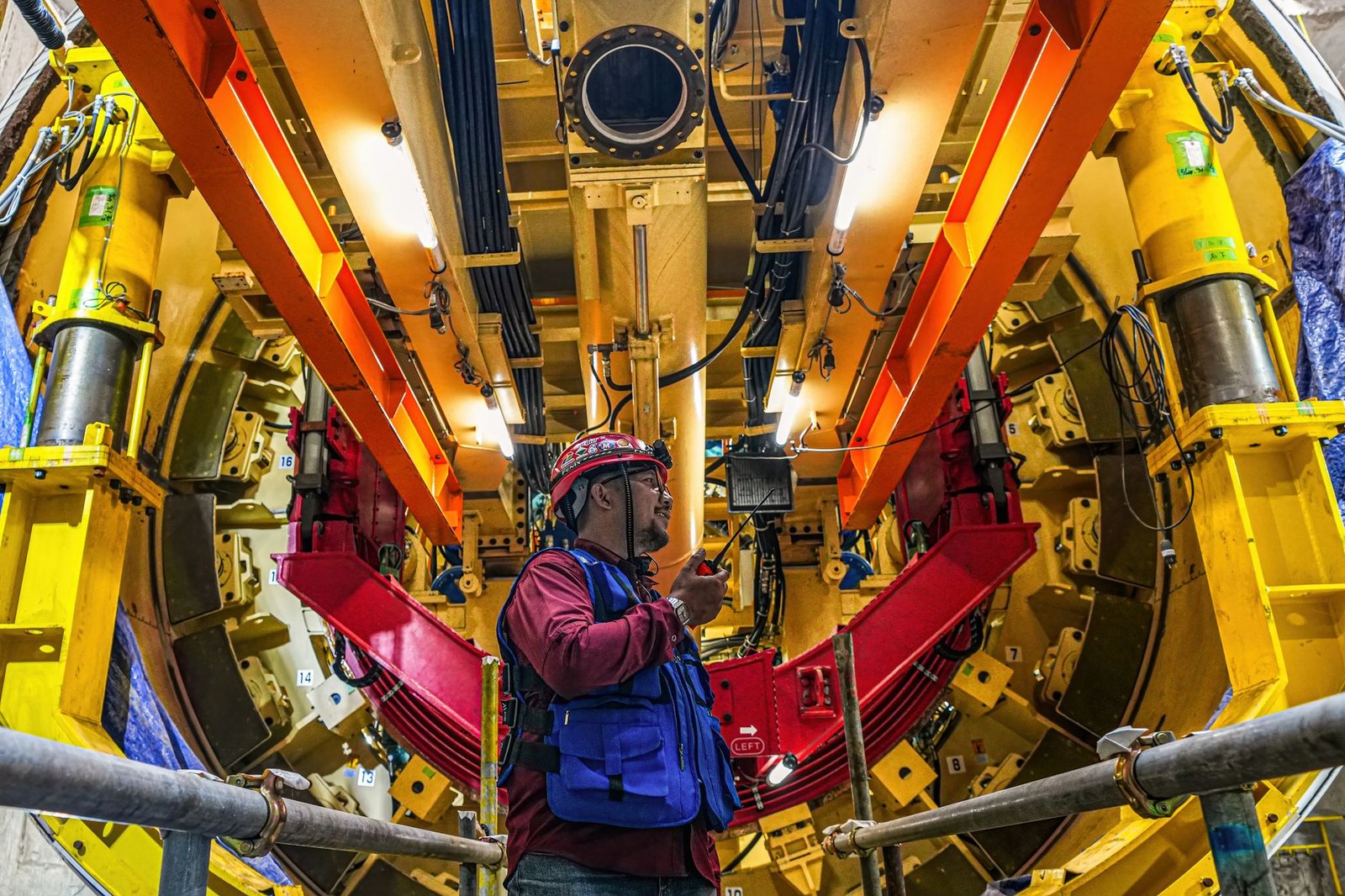
The Hudson Tunnel Project has reached the milestone its builders have been working towards for years. According to the Gateway Development Commission, the first tunnel boring machine for the new rail tunnel between New Jersey and New York has started excavating on schedule, cutting into the rock face in North Bergen, New Jersey. A second machine is set to follow in the coming weeks, the commission says. Equipment World reports that this is the first new rail tunnel of its kind under the Hudson River in more than 100 years.
Hudson Tunnel Project machines begin the Palisades drive
According to the Gateway Development Commission, the first two machines will build the first 5,100 feet of the new tunnel tubes, running from the tunnel portal in North Bergen to the Hudson County Access Shaft on the border of Weehawken and Hoboken. Webuild Group, whose United States subsidiary Lane is delivering this section in joint venture, says the Palisades section consists of two parallel tunnels, each about 1.6 kilometres long and 7.7 metres in diameter, lined with precast concrete segments. The work also includes six cross passages between the tunnels and a shaft about 37 metres deep, according to Webuild.
The machines themselves are built for hard rock. According to reports from the project, each single shield machine has a cutterhead about 28 feet and 8 inches across, trailing gear stretching roughly 500 feet, and a weight of more than 1,680 tons. The Gateway Development Commission says each machine is expected to advance about 30 feet per day, including pauses for maintenance, and that this first section will take about one year to complete. When the machines reach the access shaft, they will be removed and replaced with a different pair designed for the mixed ground conditions under the Hudson River itself, the commission says.
Why this tunnel matters so much
The wider Hudson Tunnel Project is a 16 billion dollar programme to build a new two tube rail tunnel under the Hudson River and then repair the existing tunnel, which opened in 1910 and was damaged by Hurricane Sandy in 2012, according to the Gateway Development Commission. Project officials say the old tunnel cannot be taken out of service for full repairs until the new tunnel is operating, which makes the new tubes the key to fixing the busiest rail corridor in the United States.
According to Equipment World, the route between New Jersey and New York Penn Station carries about 200,000 riders a day, and the wider Northeast Corridor handles about 800,000 passenger trips a day. Gateway Development Commission chief executive Tom Prendergast said the moment the cutterhead bit into the rock was, in his words, the most significant delivery milestone on the project to date, and he credited the hundreds of people who planned, designed and built the equipment and launch works.
What happens next
The immediate task is the year long drive through the Palisades rock to the Hudson County shaft. After that, according to the commission, the second pair of machines will take over for the river section, where the ground changes and the engineering challenge grows. The Palisades work is being delivered under a 466 million dollar contract, and it is the first mechanised tunnelling contract awarded under the wider programme, according to Webuild.
If the programme stays on its published path, the new tunnels are scheduled to open in 2035, project officials say. For engineers watching from Nepal and elsewhere, the lesson is familiar but worth repeating: the hardest part of a megaproject is often not the headline structure, it is sequencing the work so a century old asset can keep running while its replacement is built beside it, one 30 foot advance at a time.
Source: Equipment World coverage of the tunnel boring launch and the Webuild Group press note on the Palisades Tunnel Project.