
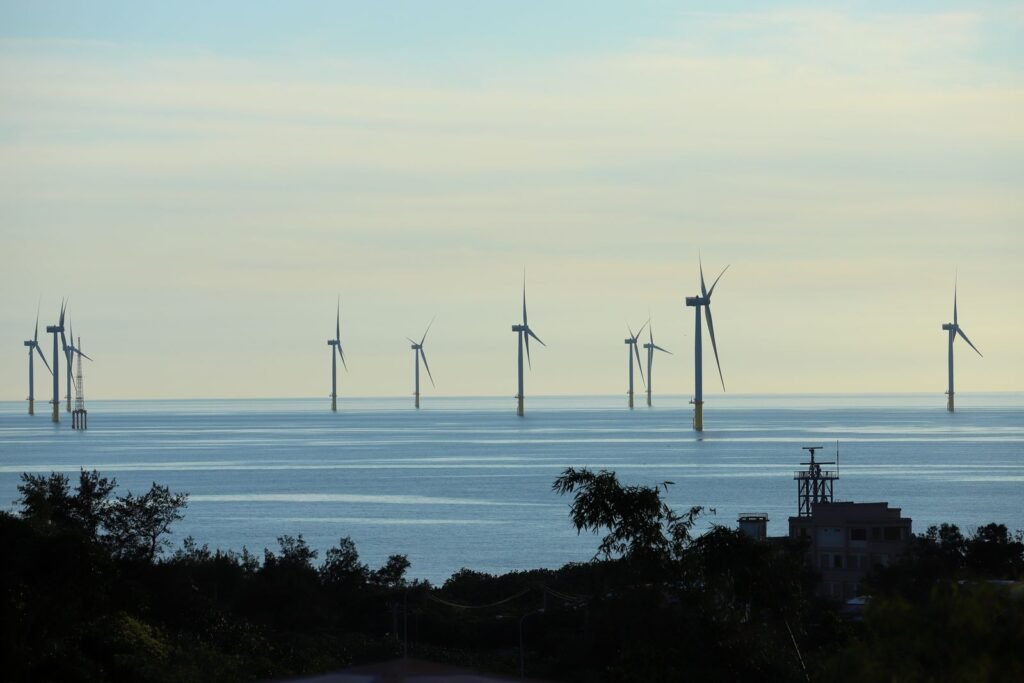
East Anglia TWO has completed a record breaking engineering operation on the Suffolk coast, according to ScottishPower Renewables. The company says it has installed two huge cable ducts beneath the coastline and seabed near Thorpeness, creating the protected route that will bring power ashore from the 960MW offshore wind farm.
What Happened on the Suffolk Coast
ScottishPower Renewables announced the completion on October 15, 2026. According to the company, the two ducts are just under 1,800 metres long and 800 millimetres in diameter. The company says they are the world’s longest continuous single sections of extruded polyethylene ducts, and that, based on the combination of length and diameter, they form the largest electricity transmission landfall of its kind in the UK.
The ducts will house the high voltage export cables for the wind farm. According to ScottishPower Renewables, East Anglia TWO is a £4 billion project located in the southern North Sea, around 33 kilometres from the Suffolk coast at its nearest point off Southwold and 37 kilometres from Lowestoft. The company says the wind farm will have capacity of up to 960MW, enough to power the equivalent of almost one million homes.
How the East Anglia TWO Landfall Was Built
The engineering substance of this story is the drilling method. According to ScottishPower Renewables, the ducts were installed using horizontal directional drilling, known as HDD. The technique creates a bore deep beneath the ground without digging up beaches, dunes, cliffs or coastal habitats. The company says rigs worked onshore and offshore at the same time to guide the bore beneath the coastline and seabed.
That choice matters because landfall is where an offshore wind farm is most exposed to environmental damage and construction risk. A trench across the beach would have disturbed a sensitive coastline. The HDD bore avoids that open cut, according to the company, and keeps the cable protected underground for its whole shore crossing.
The ducts themselves are also a manufacturing story. According to Pipelife, the manufacturer, the longest pipe measured 1,793 metres and is the longest pipe Pipelife Norway has ever made. The company says it produced the pipe through continuous extrusion as one uninterrupted length, without welding, which removes welded joints and makes the duct more robust for a demanding installation. After manufacture at Stathelle in Norway, according to Pipelife, the pipe was towed across the sea to Thorpeness in England.
The HDD works form part of the onshore civil engineering programme for the project. According to ScottishPower Renewables, principal contractor OCU Group led the works, with support from its subsidiary Peter McCormack and Sons, and the contract is supporting more than 80 jobs during construction. Ross Ovens, Managing Director for Offshore at ScottishPower Renewables, said the completed HDD is three times the length of the company’s other East Anglia projects, and described landfall works as one of the most technically challenging parts of building an offshore wind farm.
Why This Record Matters
A record on its own is only a number. This one matters for three practical reasons. First, a longer single duct with no welded joints reduces weak points on a cable route that must perform for decades under the seabed. Second, a proven HDD landfall at this scale gives future offshore wind projects in the UK and elsewhere a working reference for crossing sensitive coasts without open trenching. Third, the milestone keeps a very large clean power project moving. According to ScottishPower Renewables, the project has already injected more than £1.5 billion into the UK supply chain to date.
For civil engineers, the lesson is in the planning chain. The record depended on matching the drill design, the duct manufacture, the sea tow and the pull in operation as one system, rather than treating each as a separate package. According to OCU Group HDD Director Mike McNulty, installing a 1,800 metre, 800 millimetre polyethylene pipe in a single continuous section demanded meticulous planning and close collaboration.
What Happens Next
According to ScottishPower Renewables, the first export cable is expected to be installed in summer 2027. The company says the wind farm is working towards commercial operation in late 2028. Between now and then, the offshore turbines, foundations and substations must be completed and connected through the ducts that have just been installed.
If that programme holds, the Suffolk landfall completed this week will be the quiet part of the project that makes the visible part possible: power generated far out in the North Sea reaching homes onshore through a record breaking duct that most people will never see.
Sources: ScottishPower Renewables announcement and Offshore Wind Biz report.