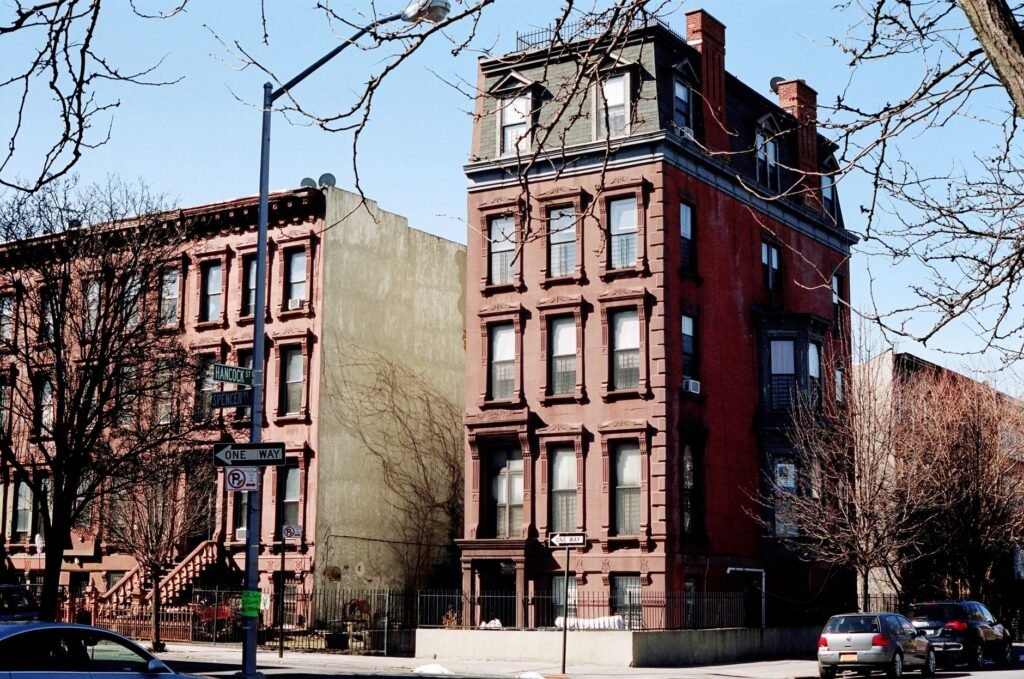
A three-storey apartment building in Brooklyn, New York, collapsed into an excavation pit next door on the afternoon of November 11, 2026, killing eight people and injuring 18 others. According to Engineering News-Record, the building at 1321 Flatbush Avenue fell into the open excavation at 2625 Bedford Avenue, where work had begun on a planned apartment building. The dead included two children and two construction workers, according to city officials cited by Engineering News-Record. More than 250 firefighters and rescue workers responded to the scene.
The collapse is now one of the deadliest construction-related failures in New York in recent years, and the investigation has turned into a hard look at how excavation beside old buildings is planned, approved and actually carried out. On November 18, the city’s Department of Buildings ordered the controlled demolition of the building next door at 1323 Flatbush Avenue, after forensic engineers determined it was too unstable for workers to safely enter and shore it up.
Brooklyn building collapse: what the approved plans required
The engineering records reviewed by Engineering News-Record show that the risks of digging beside the old building were known and written into the approved plans. A geotechnical report said buildings abutting the property line would require underpinning, and it warned that excavation and construction-related vibration could adversely affect adjoining structures. The approved plans also required baseline readings and continued monitoring of neighbouring building movement, existing cracks and vibration as excavation progressed, with thresholds that required notification or a halt to work.
A preconstruction survey carried out on March 5 documented visible cracking at 1321 Flatbush Avenue and rated its north masonry facade in poor condition, according to Engineering News-Record. The same survey said detailed information about the building’s foundation type and other structural features had not been provided. During its review, the Department of Buildings directed the project engineer to provide the materials and elevations of adjoining foundations on the support-of-excavation drawings, and the engineer responded in March that the information had been added. The available records do not identify what investigation was used to establish those foundation conditions.
The building itself dated from 1930. City housing records reviewed by Engineering News-Record found 98 open violations at 1321 Flatbush Avenue, including 21 classified as immediately hazardous, and the property carried 170,000 dollars in unpaid Department of Buildings penalties. None of the recent violations reviewed identified a foundation failure or structural instability, according to Engineering News-Record.
What was actually built remains unclear
The central question in the investigation is whether the work on site matched the plans that were approved. According to Engineering News-Record, it remains unclear whether 1321 Flatbush Avenue was actually underpinned, how deep the excavation ran along the property line, and which portions of the approved support-of-excavation system had been installed when the building fell. The Department of Buildings said on November 16 that excavation along the south side of the site used benching, which it described as standard industry practice, but it did not say whether 1321 Flatbush Avenue was underpinned.
The monitoring data that should answer some of those questions is not in the publicly available records reviewed by Engineering News-Record. The baseline readings and subsequent movement, crack gauge and vibration data have not been released, and the special inspection reports for the excavation sheeting, shoring and bracing have not been released either. The Department of Buildings portal lists that inspection category as identified but not certified following the collapse, which does not establish whether inspections occurred.
The site had a troubled enforcement history before the collapse. According to Construction Dive, the Department of Buildings issued a stop-work order at 2625 Bedford Avenue as early as March 20, 2026, after inspectors found demolition proceeding without adequate overhead protection for surrounding properties. Inspectors returned on April 23 to find demolition had resumed in violation of the active order, and the order was lifted on May 8 after the agency determined the cited conditions had been corrected. City records show excavation was permitted to extend 14 feet below grade, according to Engineering News-Record.
Why it matters for engineers everywhere
The Brooklyn building collapse matters because it exposes the gap that can open between a sound design on paper and the work that actually happens in the ground. Underpinning, support of excavation and structural monitoring are the standard tools for digging beside old buildings, and the approved plans for this site called for all of them. The failure shows that prescribing those measures is not enough. Somebody has to verify that underpinning was installed, that monitoring instruments were read, and that the thresholds for stopping work were respected.
The lesson reaches beyond New York. Cities everywhere are building taller beside ageing masonry buildings, often with only a few feet between a new excavation and a neighbour’s foundation. When the ground moves, an old building with unknown foundations and pre-existing cracks has very little margin. As Julio Miranda, a partner at structural monitoring firm Estructura, told Engineering News-Record, monitoring data acts like an airplane black box, telling investigators what happened seconds before a collapse and days before it.
What happens next
The investigation is now running on several tracks. Brooklyn District Attorney Eric Gonzalez has opened a criminal inquiry, and New York Attorney General Letitia James said on November 13 that the Department of Buildings would conduct a full investigation, according to Engineering News-Record. Mayor Zohran Mamdani ordered safety inspections at about 100 construction sites associated with companies involved in the project, and the Department of Buildings has since widened the sweep to more than 160 sites. Gothamist reported on November 17 that the department had inspected at least 24 jobsites in four boroughs tied to the project engineer and the special inspector, issuing full or partial stop-work orders at at least five.
At the collapse site, the Department of Buildings stop-work order remains in effect, with only work needed to keep the site safe or to assist the investigation allowed to proceed. City contractors are replacing soil removed from the north side of the excavation to fill the hole along the property line, and debris removal has been paused while the department prepares an independent forensic engineering review. Before demolition of 1323 Flatbush Avenue begins, registered contractors will install shoring inside neighbouring 1325 Flatbush Avenue, and vacate orders at 1325 and 1327 Flatbush Avenue remain in effect.
The forensic review will have to answer the questions that matter most to engineers: was the building underpinned, was the excavation supported as designed, and was the monitoring data read and acted on. Until those answers come, the Brooklyn building collapse stands as a warning that the most dangerous moment in urban construction is often not the structure being built, but the hole dug beside the one already standing.
Source: Engineering News-Record, “Brooklyn Collapse Records Reveal Gap Between Plans and Site Work,” updated November 18, 2026: https://www.enr.com/articles/64346-updated-brooklyn-collapse-records-reveal-gap-between-plans-and-site-work