
Table of Contents
On 23 September 2026, Infrastructure Development Minister Sunil Lamsal tabled the Waste Management Bill, 2083 in Nepal’s House of Representatives — the most significant overhaul of the country’s waste laws since the 2011 Waste Management Act (2068). If passed, the Nepal Waste Management Bill 2083 would replace a framework that no longer fits Nepal’s federal structure with a single, nationwide model built around segregation at source, steep penalties, and a circular economy.
Why a new law, and why now
The 2068 Act was written before federalism. It never assigned clear roles to provincial governments, and enforcement stayed weak. The results are visible: Kathmandu Valley’s recurring garbage crises, overflowing collection systems, open dumping along riverbanks and roadsides, and landfill sites that remain limited and poorly managed. Contaminated drinking water and public-health risks have followed. The bill’s answer is to treat waste as a resource rather than a problem, and to give every tier of government a defined job.
The core provisions of the Nepal Waste Management Bill 2083
Clear three-tier responsibilities. Federal, provincial, and local governments each get defined duties across the full waste cycle — generation, segregation at source, collection, transportation, processing, and final disposal. Local governments take primary responsibility for day-to-day collection and enforcement; provinces and the federal level handle policy, technology transfer, inter-municipal cooperation, and large-scale infrastructure.
Mandatory source segregation. Households and businesses will be legally required to separate biodegradable, non-biodegradable, and hazardous waste at the point of generation. Mixing segregated streams is itself an offence.
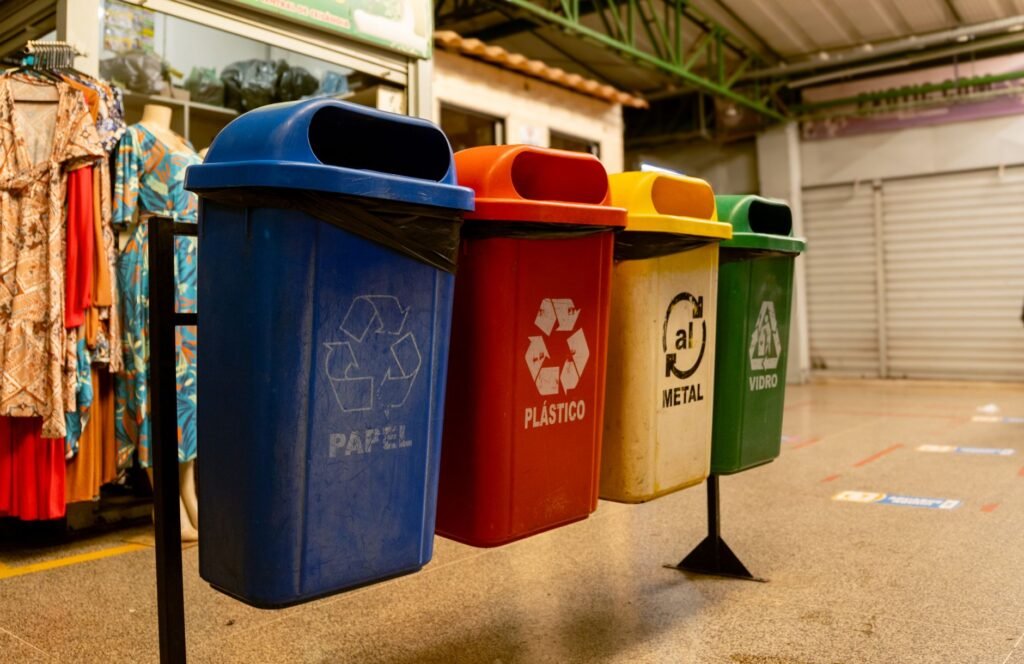
Dustbins everywhere, fast. Within three months of the law coming into force, local governments must install covered dustbins allowing separate collection of the three waste streams in public places — roads, parks, gardens, venues, transport stops, and parking areas. Citizens must use the nearest dustbin; failing to do so can draw a fine of up to Rs 15,000.
Fines from Rs 500 to Rs 1 million. Local governments and chief district officers get wide enforcement powers: improper handling of hazardous waste (chemical, industrial, healthcare, electronic, or construction-related) up to Rs 1 million plus disposal costs; dumping household waste in public places up to Rs 5,000 first offence and Rs 15,000 for repeat violations plus cleanup costs; damaging or removing a public dustbin Rs 15,000–50,000 plus replacement cost; operating a commercial waste service without a permit Rs 15,000–50,000 and immediate suspension; obstructing collection or disposal Rs 10,000–50,000 fine, 15 days to 3 months imprisonment, or both; vehicles blocking cleaning operations Rs 1,000–5,000. Anyone unhappy with a fine or decision can appeal to the district court within 35 days.
Circular economy written into law. Beyond penalties, the Nepal Waste Management Bill 2083 embeds zero waste, extended producer responsibility (EPR), and circular-economy principles into national legislation — covering reduction at source, composting, energy recovery, and safe residual disposal. Simply collecting and dumping waste would no longer be the legal norm; processing it into compost, biogas, or energy must become standard practice.
Room for partnerships and research. The draft encourages public-private partnerships, co-investment between tiers of government, development assistance, and municipal research and technology exchange — a direct response to complaints that municipalities lack landfill access, transport capacity, and processing facilities.
The bigger national target
The bill aligns with Nepal’s National Integrated Waste Management Strategy and Action Plan (2020–2035), which targets diverting 80% of waste from landfills by 2035 on the path toward zero waste, built on 3R principles and integrated resource recovery centres. In effect, the long-term policy direction is a Nepal that barely needs landfill sites at all.
What the Nepal Waste Management Bill 2083 means for civil engineers
This is infrastructure legislation as much as environmental legislation. If enacted, municipalities will need — quickly — transfer stations, material/resource recovery facilities, composting and biogas plants, sanitary landfill design and remediation, leachate management systems, and collection-route planning. Engineers who understand waste infrastructure design, EPR systems, and circular-economy project models will find a growing market in municipal consulting and contracting.
Status: not law yet
The Nepal Waste Management Bill 2083 becomes law only after passage by both houses of the Federal Parliament and authentication by the President. It is currently in the discussion phase. Once enacted, local governments get a short window to install the required infrastructure before full enforcement begins — so the construction and consulting pipeline will move fast when it does.
Related on this site: explore our Nepal Building Code hub, browse the Government orders directory, or try our calculator toolkit for quick engineering estimates.